Skip to content
Free Consultation

Resources for the Press

Izometryczna grafika ilustrująca centrum prasowe z fioletowymi akcentami. Przedstawia dziennikarzy przeprowadzających wywiady z użyciem kamer i mikrofonów, reporterów pracujących na laptopach, unoszące się dymki rozmów, stosy dokumentów i materiałów prasowych oraz duży ekran z wiadomościami
2026: The Year of Operational Intelligence in Road Transport! Why carriers must learn to operate differently and why this is only the beginning?
(Warsaw, 24.08.2026) 


Zdjecie dekoracyjne przedstawiające ciężarówkę na autostradzie

We are entering the fourth quarter, a period that has traditionally been the harvest season for road transport and logistics. Freight volumes increase, fleets operate more intensively, and the end of the year typically generates the largest number of transport orders across many served industries. But in 2026, will more work actually mean more profit?

Vehicles may cover more kilometers, the number of assignments may continue to grow, and fleet utilization may appear optimal, yet financial performance does not necessarily follow the scale of activity. When the time comes to review annual results, many companies may find themselves asking a difficult question: where did we lose our margin despite completing so much transport work?

This issue is examined by experts from ALEET, the creators of a digital fleet twin.

2026 Tests the Economic Efficiency of Transport

As recently as 2024, Polish transport companies were responsible for 32.7% of freight activity in international road transport within the European Union[1] and continue to hold a leading position in this market. Poland’s GDP is forecast to grow by approximately 3.6% this year[2]. Taken together, these factors should create a relatively favorable demand environment.

However, economic growth, market share, and a high volume of transport orders no longer guarantee profitability. For years, the natural response to market growth was scaling operations: more vehicles, more drivers, more routes, and more assignments. According to ALEET experts, that mechanism is now changing.

The costs of fuel, labor, financing, maintenance, and road tolls continue to rise. At the same time, the shortage of professional drivers across the EU road transport market limits opportunities for further expansion. As a result, the key question is no longer, “How can we transport more?” but rather, “How much are we actually earning from the freight we already move?”

If fuel can account for as much as 45% of operating expenses, every empty mile, unplanned stop, or inefficient route has a direct impact on margins. Profitability is no longer driven by scale alone.

The 2026 Regulatory Wave Deepens Cost Pressures

According to ALEET experts, this year’s regulatory agenda clearly demonstrates the scale of cost pressure facing the industry.

Since February 2026, carriers have been dealing with significant increases in e-TOLL rates, along with the expansion of the toll road network by an additional 645 kilometers, bringing the total to nearly 5,900 kilometers. At the same time, the National e-Invoicing System (KSeF) has transformed document workflows and further integrated operational and financial processes.

In June, road transport became fully subject to the ICS2 system, increasing the importance of data quality and timeliness in shipments entering the EU from third countries. From July 1, vehicles with a gross vehicle weight between 2.5 and 3.5 tonnes performing international transport became subject to the mandatory use of G2V2 smart tachographs and regulations governing driving and rest times.

Additional requirements related to safety, decarbonization, and reporting continue to emerge. While this may appear to be an ever-growing list of obligations, there is another dimension to this transformation: road transport is becoming one of the most monitored and measured service sectors in the economy.

The Data Problem Is Really an Analytics Problem

As ALEET experts point out, the transport industry has undergone intensive digitalization over the past decade. TMS platforms, telematics, fuel management systems, driver applications, electronic documentation, and maintenance solutions have become standard tools.

Today, every vehicle leaves behind a detailed digital footprint, including location, mileage, fuel consumption, driver working hours, stops, technical parameters, toll payments, order-related information, maintenance data, and emissions records. Paradoxically, transport companies now possess more data than ever before, yet this does not necessarily mean they have a deeper understanding of their own business.

According to ALEET experts, the challenge lies in the fragmentation of this data. The next phase of digitalization will therefore not be about generating more information. It will be about connecting data in a way that reveals the true economics of transport operations. This is where the most significant technological shift begins.

From Managing the Past to Managing the Future

The transport management systems commonly used across the industry answer questions such as: What happened? Where was the vehicle? How much fuel did it consume? How long did a stop last? In other words, they provide historical information.

Today, however, an environment characterized by constant change and cost pressures demands answers to a different set of questions: What is likely to happen next? Will the vehicle be able to complete the next assignment on time? How will a given change affect margins? Under current cost conditions, is a particular order still profitable?

ALEET experts emphasize that moving from observation to prediction represents a technological revolution for the transport sector. The objective is to understand the consequences of future decisions before those decisions are made.

It Is Not About AI for AI’s Sake or Yet Another Dashboard

According to Boston Consulting Group (BCG), more than 40% of customers already expect logistics providers to offer AI-powered solutions. They also consistently identify three areas where AI delivers the greatest value: transport planning, forecasting, and visibility[3].

In this context, it is worth looking at digital twin technology. Its essence is not a digital representation of a truck, but rather a dynamic model of the actual operating environment, encompassing the vehicle, driver, route, assignment, costs, and constraints.

ALEET experts emphasize that, in this model, data ceases to be used solely for reporting purposes and instead becomes a tool for predictive management, supporting decision-making and ultimately improving financial performance.

Operational Intelligence Will Be the New Competitive Advantage

Although Polish transport remains one of the pillars of the European freight market, it would be a mistake to assume that the sources of success from the past two decades will ensure a similar position in the years ahead.

Cost advantages are becoming increasingly difficult to maintain. Driver availability is unlikely to improve, regulatory and environmental pressures will continue to intensify, and customers will demand greater predictability and transparency.

However, the next competitive advantage will not come from technology itself, but from the ability to use it effectively.

ALEET experts predict that 2026 may be remembered as a year of regulatory and cost accumulation, but equally important is another development: this is the moment when transport begins moving beyond process digitalization toward operational intelligence.

And if, at the end of the year, we ask ourselves, “Where is our profit?”, the answer may be found not in the number of kilometers traveled, but in the quality of the decisions made along the way.


About ALEET

ALEET is a Polish technology company developing transport management solutions powered by digital fleet twins, artificial intelligence, and advanced freight analytics. ALEET systems support transport operators in planning and optimizing their operations, helping them reduce costs, improve fleet utilization, and make faster operational decisions.

ALEET solutions can be integrated with companies’ existing telematics systems and other data sources, regardless of technology provider.

ALEET was founded in 2021 by Dr. Katarzyna Marczuk, an expert in transport systems who has spent more than 15 years developing advanced technologies for mobility and logistics. She earned her PhD from the National University of Singapore, conducting research in collaboration with MIT. Earlier in her career, she contributed to autonomous mobility solutions developed by nuTonomy, and later by Delphi/Aptiv and Motional, which have been deployed in locations including Singapore and the United States.

Dr. Marczuk is the author and co-author of 27 scientific publications and five patents related to transport technologies.


[1] https://pie.net.pl/wp-content/uploads/2026/06/2026_06_17_Polski-transport-drogowy-musi-znalezc-nowe-zrodla-przewag-konkurencyjnych.pdf


[2] https://www.ey.com/pl_pl/newsroom/2026/06/ey-european-economic-outlook


[3] https://www.bcg.com/publications/2026/ai-is-already-moving-the-logistics-industry-forward


Pdf file to download:2026_rokiem inteligencji operacyjnej_w_transporcie_komentarz_ALEET_24082026

First-movers take the lead. How are fleet digital twins reshaping operational capabilities in transport and logistics?

(Warsaw, 29.07.2026)
 

Obrazek AI przedstawiający dekoracyjnie znaczenie AI w logistyce i optymalizacji tras


The companies that gain a competitive edge will not be those that are first to purchase AI tools, but those that are first to learn how to use them in day-to-day operational decision-making. Is implementing a fleet digital twin merely an investment in new technology, or is it also a moment to build organizational capabilities that, in a few years, may prove just as valuable as the solution itself?

In the commentary below, Dr. Katarzyna Marczuk, CEO of Aleet, a technology company and creator of AI-powered transportation management solutions, explains why the development of AI-based technologies requires a new approach to both managerial and operational competencies.

Technology is evolving far faster than organizations are learning how to unlock its full potential. This applies to virtually all solutions powered by artificial intelligence algorithms. It is much easier to make the decision to purchase an AI tool than to help the people implementing it understand the skills required for successful adoption and the new capabilities that such implementation can develop.

Technology as a Strategy, Not a Project

We have become accustomed to viewing technology implementations primarily as projects. Discussions typically focus on timelines, system integrations, and return on investment. At the same time, these initiatives also drive changes in how decisions are made, how operational processes are managed, and how data is used across organizations.

This means working in an environment that leverages increasingly large streams of data, understanding the relationships between business and operational processes, and being able to assess the value of recommendations generated by a given system. As a result, AI-powered solutions are no longer simply technology projects. They are becoming integral elements of business strategy.

What is discussed far less often, however, is the set of competencies that emerge during implementation and how these competencies reshape organizational operations and workplace culture. From a business perspective, this may be one of the most significant benefits of today’s technological transformation.

In this context, it is worth noting that technologies being implemented today, such as the fleet digital twin, will become widely available in a few years. Competitive advantage will belong not necessarily to the organizations that are first to acquire AI tools, but to those that are first to learn how to use them effectively in everyday operational decisions.

This is particularly evident in AI-powered fleet digital twins used in road transportation management. Their value extends far beyond the ability to quickly integrate and process data. They fundamentally change the way organizations are managed.

Fleet digital twins enable companies to evaluate the consequences of specific decisions before they are made, model operational scenarios, and support processes in real time. Yet the technology itself remains only a tool, and ultimate responsibility for its use and for decision-making continues to lie with people.

Unfortunately, this is precisely why many organizations perceive the implementation of new solutions as an additional operational burden. In reality, it is a process of building and developing new competencies among the people responsible for leveraging this new potential.

Importantly, these competencies should not be limited to understanding a specific technology. They include the ability to comprehend business processes operating in an AI-supported environment, compare operational scenarios, assess the quality of system recommendations, and understand the trade-offs between costs, fleet utilization, and SLA (Service Level Agreement) performance.

Be First to Gain the Advantage

This transformation is reflected in the latest reports on workforce competencies.

According to the World Economic Forum’s “The Future of Jobs Report 2025”, 63% of employers identify skills shortages as the primary barrier to organizational transformation between 2025 and 2030. Among the fastest-growing competencies are analytical thinking, working with AI and Big Data, and technological literacy.

Notably, the report extends beyond purely technical skills. Flexibility, creative thinking, and lifelong learning are also listed among the most desirable capabilities. This clearly demonstrates that the shift taking place within organizations is far broader than simply developing digital skills.

Similar conclusions can be found in the OECD report “AI and Skills,” which highlights the growing importance of competencies that complement artificial intelligence. These include critical thinking, problem-solving, decision-making, and the ability to effectively utilize new technologies in the workplace.

Additional insights are provided by the OECD report “Artificial Intelligence and the Changing Demand for Skills in the Labour Market,” which points to the increasing importance of cognitive skills that combine an understanding of business processes with the ability to leverage emerging technologies.

These are precisely the capabilities that can be developed by remaining open to the opportunities created through the implementation of innovative solutions.

For this reason, organizations should view current technology deployments from a broader perspective. The greatest advantage will belong to those who first acquire the competencies needed to manage AI-supported operational processes.

In a few years, access to the technologies entering the market today will no longer be a differentiator. The competencies developed during their implementation, however, will enable employees to thrive in a workplace increasingly supported by AI, regardless of their position or age.


[1] https://reports.weforum.org/docs/WEF_Future_of_Jobs_Report_2025.pdf


[2] https://www.oecd.org/content/dam/oecd/en/publications/reports/2026/06/ai-and-skills_8dbed5fe/f843b352-en.pdf


[3] https://www.oecd.org/content/dam/oecd/en/publications/reports/2024/04/artificial-intelligence-and-the-changing-demand-for-skills-in-the-labour-market_861a23ea/88684e36-en.pdf


File pdf for download: Pierwsi będą mieli przewagę_komentarz _drKatarzynaMarczuk_ALEET_29072026


Costs are killing road transport, but a lack of cost visibility and slow decision-making are also a problem.

(Warsaw, 29.06.2026)

 

Grafika obrazująca dwie ciężarówki, kalkulator i pieniądze oraz wykres wzrostu kosztów transportu


There is no doubt that the Polish transport industry is under immense pressure today. Rising driver labor costs,fuel and fleet maintenance expenses, rapidly increasing road tolls, severe penalties under the SENT monitoring system, and deteriorating operating conditions across the EU market mean that a growing number of companies are operating on the brink of profitability-or shutting down altogether. It is also difficult to ignore the fact that carriers from other Central and Eastern European countries operate with lower overhead costs,further intensifying competitive pressure on Polish businesses. Industry organizations are seeking new legal solutions, hoping for top-down market regulation.
How can you grow a transport business under such conditions, and is it possible to increase its profitability?Dr. Katarzyna Marczuk, CEO of Aleet-a Polish technology company developing AI-based transport management solutions-comments and provides answers.
According to the Association of International Road Transport Carriers in Poland (ZMPD), over 800 Polish transport companies holding a Community license ceased operations in the first quarter of this year alone[1].The sector’s profitability has been virtually exhausted, and the ability to maintain financial liquidity is rapidly declining. The industry is urgently searching for solutions to improve the market position of its operators.Appeals and discussions among representatives of industry associations and hauliers show that they expect legislative changes to improve business conditions—such as partial fuel excise duty refunds, maximum payment terms, and other measures addressing financial liquidity and labor costs. What stands out, however,is that the debate on the future of transport is increasingly reduced solely to regulatory matters. Yet this is only one piece of the puzzle: while legal regulations will certainly mitigate some of the issues, they cannot, on their own, increase companies’ operational efficiency.
This is particularly crucial in a service sector where the bottom line is not determined by a single strategic decision, but by thousands of daily operational choices. Route planning, matching vehicles to orders,organizing driver working hours, and managing loading operations or downtime—every single one of these decisions impacts the profitability of a haul. In practice, this means that even minor inefficiencies repeated day after day can, over a month or a year, determine the financial result of the entire company. Management boards see the final financial outcome, but often lack the ability to quickly pinpoint which processes, vehicles,contracts, or operational events are responsible for its decline. The issue here is not data quality, but how quickly that data is processed and what decisions are made based on it. Today, a mid-sized transport company uses TMS, ERP, GPS, Business Intelligence reports, and dozens of Excel spreadsheets. There is more data available than ever before. Yet transport company owners still ask themselves the same questions: which course of action will be the most cost-effective, how large a fleet do we truly need, and how will a new contract or a change in work organization affect our bottom line? Between data and decision-making, there is still a human relying on intuition and forward-looking analysis. It is precisely this capability-analyzing future operational scenarios using AI technology-that remains overlooked by the Polish transport industry.
While the local industry focuses on seeking legal remedies, global logistics leaders are investing in technologies that allow them to predict the outcomes of decisions before they are even made. Digital Twin Systems (DTS) enable companies to shift from analyzing what has already happened to simulating the impact of decisions prior to implementation. In practice, this means being able to quickly identify why a specific vehicle, lane, or contract is generating a loss, and pinpoint the exact moment the problem began. DTS allows companies not only to analyze results, but also to simulate the effects of changes before rolling them out. In examples highlighted by McKinsey & Company (in the report Digital Twins: The key to unlocking end-to-end supply chain growth[1]), digital twin implementations translated into up to a 20% improvement in delivery promise fulfillment, a 10% reduction in labor costs, an 8% reduction in freight and damage costs, a 5% reduction in last-mile delivery costs, a 15% reduction in distribution center costs, and a 10% improvement in regional distribution center utilization. At the same time, market forecasts indicate that global investments in Digital Twin Systems for logistics will grow from approximately $1.9 billion to $18.7 billion over the next decade.
This is because the role of digital twins is not to create yet another data source, but to build a digital model of operations that allows companies to analyze the financial impact of operational decisions before implementing them. In practice, this represents a shift from management based on retrospective performance analysis to management driven by simulation and forecasting the outcomes of future actions.
This is a direction that is already setting the standards for logistics and supply chain management in the most competitive markets. From this perspective, it is worth asking whether the Polish transport industry, by focusing on a single path of solutions, is overlooking tools that can improve operational efficiency regardless of administrative conditions. Of course, the road transport sector needs stable and rational legal regulations.However, long-term competitiveness will not be built solely through legislative changes; rather, decision-making agility will become one of the most critical sources of competitive advantage.


[1] https://www.mckinsey.com/capabilities/quantumblack/our-insights/digital-twins-the-key-to-unlocking-end-to-end-supply-chain-growth


[2] Road transport on the brink of collapse: ZMPD appeals to Poland’s Minister of Infrastructure https://zmpd.pl/aktualnosc.php?akt_id=2718


Pdf file for download: Komentarz_ALEET_drKatarzynaMarczuk_To nie wzrost kosztów zabija transport drogowy_29062026

Road transport is entering the DTS (Digital Twin System) era!

(Warsaw, 19.05.2026)
 

Dekoracyjny obrazek AI Transport drogowy wchodzi w epokę DTS - Digital Twin System


The transport and logistics industry is entering a new phase of development, in which decision management and prediction are replacing traditional transport management based on telematics data. According to experts at ALEET, a developer of AI-based transport solutions, we are entering the era of DTS—Digital Twin Systems—meaning digital twins of fleets and transport operations. This is confirmed by McKinsey & Company analyses[1], which indicate that companies using AI-powered digital twins achieve up to a 30% improvement in operational efficiency, reducing warehousing, transport, and inventory holding costs.
“McKinsey’s findings clearly reflect the direction we have been observing for several years in our work with transport companies. A digital twin is no longer a technological curiosity or an add-on to existing ERP or TMS platforms. Increasingly, it is becoming a decision-making layer that allows companies not only to analyze data,but above all to predict the outcomes of operational decisions before they are implemented in reality,” says Dr.Katarzyna Marczuk, CEO and founder of ALEET. “For years, the market focused on optimizing information flow. TMS platforms organized orders, planning, and documentation. However, modern transport and logistics need more than just process recording. They need the ability to predict, simulate, and respond autonomously.That is why today we are talking about the end of the TMS era and the beginning of the DTS era,” Dr.Katarzyna Marczuk emphasizes.
According to McKinsey, enterprises implementing digital twin solutions across the entire supply chain can achieve tangible business results: from reducing transport and inventory costs to improving customer service levels. However, from ALEET’s perspective, the most important shift is not solely about cost savings. What is crucial is that a Digital Twin System changes how decisions are made within transport organizations. A classic TMS organizes information about what was planned and executed. DTS goes a step further—it helps answer the question: what might happen next, and which course of action will be best from the perspective of the entire operation?
In the view of ALEET experts, however, the key is that a Digital Twin System (DTS) transforms how transport organizations operate. A TMS answers the question “what happened?” A DTS answers the question “what will happen next, and how should we best respond?” A fleet digital twin creates a virtual representation of the entire transport operation—vehicles, drivers, routes, infrastructure constraints, and telematics data. The system does not merely analyze historical data; it continuously generates future operational scenarios.
“In practice, DTS allows you to spot a problem before it turns into a real operational cost. The system can predict the impact of a delay, a vehicle breakdown, a change in driver availability, or a traffic jam on the entire transport network—meaning on-time performance, costs, and fleet utilization. This is a fundamental difference compared to a classic TMS. A digital twin not only shows the current state of operations, but also lets you compare possible scenarios and choose the best operational decision,” explains Dr. Katarzyna Marczuk.
McKinsey notes that digital twins deliver particular value in environments characterized by high volatility and operational complexity. ALEET experts believe the biggest transformation is still ahead and will primarily encompass road transport and fleet management. “For years, transport companies operated in a reactive model. Planning relied on dispatchers’ experience, historical data, and static schedules. Meanwhile, modern fleet operations function under permanent volatility—dynamic route changes, driver shortages, infrastructure disruptions, new climate regulations, time constraints, and growing customer expectations require a completely new technological approach,” lists the ALEET representative.
According to ALEET experts, the traditional architecture of transport systems is no longer meeting market needs. “For years, the transport industry kept buying one module after another—telematics, fuel monitoring,planning, ETA, visibility, and so on. The problem is that these systems operate in silos and only show fragments of reality. As a result, organizations ended up with more and more data, but not necessarily a better picture of the entire operation. DTS unifies all operational layers into one living model of the organization. It is not just another piece of software. It is a new predictive system for managing transport operations,” explains Dr. Katarzyna Marczuk.
This means shifting from looking at historical data to actively supporting operational decisions. DTS can simulate the impact of traffic jams, vehicle breakdowns, and loading delays—as well as their ripple effects across the entire transport network—and recommend the optimal course of action. The more data flows into the system, the more accurate its forecasts and recommendations become. According to ALEET experts, this represents the biggest technological shift in transport since the widespread adoption of ERP and TMS systems.
“Soon, we won’t be asking ‘Do you have a TMS?’, but ‘How advanced is your DTS?’ Companies that stick exclusively to classic transport management systems will start losing out in terms of response speed, cost efficiency, and the quality of operational decisions. DTS will become one of the new standards of competitiveness,” assesses Dr. Katarzyna Marczuk, CEO of ALEET.
Growing interest in digital twin solutions also aligns with the broader trend of building resilient and agile supply chains. Amid geopolitical and economic instability, the ability to test disruption scenarios before they occur becomes a strategic business advantage. Therefore, according to ALEET experts, the transition from TMS to DTS is no longer a question of the future, but of the pace of adoption.


Pdf file for download: Wchodzimy w epokę DTS_komentarz ALEET_19052026

Time for a systemic approach: ALEET on securing operational data in transport and logistics in the age of AI

(Warsaw, 24.04.2026)
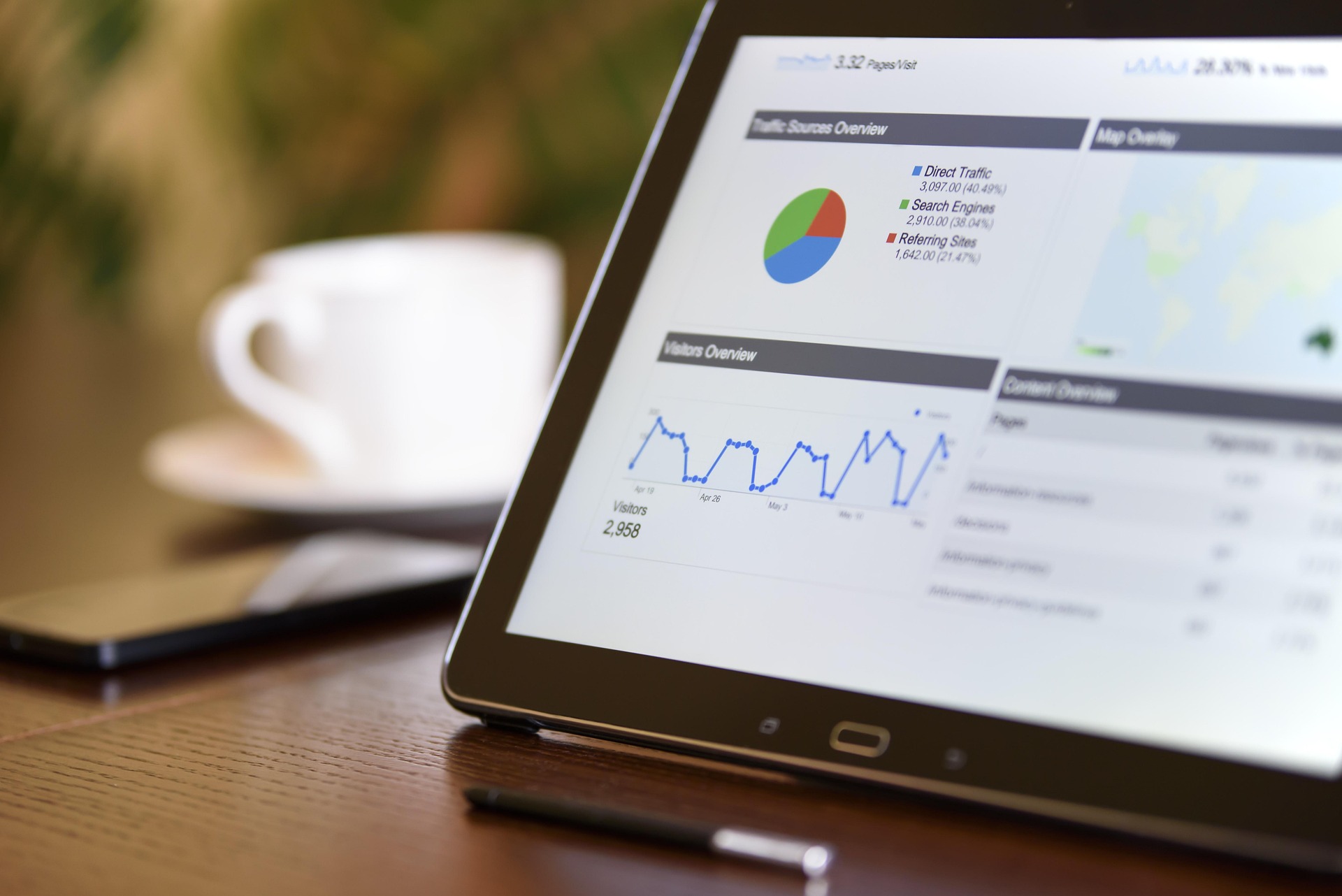
 

fotografia ekranu tableta na którym widać dane


The rapid digitization of the transport and logistics industry and the growing use of AI in managing processes and fleets have made operational data an organization’s most valuable asset—and protecting it an increasingly difficult challenge. Experts at ALEET, the creator of the fleet digital twin, point out that effective data protection is no longer solely the domain of IT departments, but requires a coordinated approach spanning the entire organization, from operations to strategic management. These conclusions are confirmed by the ISACA State of Cybersecurity 2025 report.
Underfunding and the skills gap
According to the ISACA (Information Systems Audit and Control Association) report, 55% of cybersecurity teams are underfunded, and 65% of organizations struggle with unfilled security positions. At the same time,only 29% of companies invested in reskilling employees for security roles in recent years (down from 41% in 2024), even though 70% of experts in the field predict further growth in demand for specialists. In the transport and logistics sector, where operational systems are tightly integrated with real-time data, this translates into real challenges for business continuity.
“At ALEET, we treat operational data security as a strategic element that must be built into the system architecture from the very beginning. We design our fleet digital twins for transport management so that data protection, access control, and continuous threat monitoring are an integral part of the operational environment, rather than a layer added at a later stage. As a result, organizations using our technologies build genuine resilience based not only on tools, but on a cohesive, secure data management model across the entire organization,” says Dr. Katarzyna Marczuk, CEO of ALEET.
Who poses the threat – technology or people?
The ISACA report indicates that the primary cyberattack vectors are social engineering (44%), vulnerability exploitation (37%), and malware (26%). At the same time, 43% of cybersecurity professionals consider an attack highly likely within the next year. In a logistics environment, where operational data is distributed and used across many points in the organization, these threats are systemic in nature. “The biggest shift we are observing is a move in focus from isolated incidents to managing the entire data ecosystem. Today,cyberattacks no longer affect just a single system; they can impact operational continuity, supply chains, and partner relationships. Organizations need not only tools, but a cohesive security strategy encompassing people, processes, and technology,” notes the ALEET representative.
A systemic problem
The report also shows that 66% of cybersecurity professionals experience more stress than they did five years ago, and 47% of resignations stem directly from high stress levels. This is the result of compounding factors such as staff shortages, a growing number of threats, and operational pressure. ISACA points to deficits in soft skills—specifically critical thinking (57%), communication (56%), and problem-solving (47%). “Operational data security today requires the ability to make decisions under uncertainty and collaborate effectively across departments. This is an area where technology must be supported by organizational competencies. Building a security culture that includes all employees, not just IT specialists, is essential here. We clearly see that organizations relying solely on IT teams are reaching the limits of their capacity. That is why collaboration with specialized technology partners is becoming increasingly important. It not only relieves internal teams, but above all embeds security standards right at the system design stage,” observes Dr. Katarzyna Marczuk.
AI supports security – provided it is implemented properly
According to ISACA, 47% of organizations are working on AI governance, and 40% are implementing AI-based solutions. The most common applications include threat detection (32%), endpoint security (30%), and task automation (28%). “AI is becoming a natural component of operational systems in logistics, but its role in security depends on the quality of implementation. At ALEET, we treat AI as a tool that supports threat analysis and prediction within the operational environment. Crucially, however, AI operates within a controlled architecture where data security is a design premise, not an afterthought. Our fleet digital twins enable not only data processing, but also full control over data flows, real-time anomaly detection, and threat scenario simulation. As a result, organizations gain not only efficiency, but also real resilience to risk,” emphasizes Dr.Katarzyna Marczuk, CEO of ALEET.
The conclusions from the ISACA report are clear: data security cannot be confined to a single function or the IT department within an organization. In an AI-driven environment, a holistic approach covering all levels of the business is essential.
This means integrating security into operational processes, investing in competencies, and collaborating with partners experienced in building secure data environments. In the transport and logistics industry, this is a prerequisite for maintaining operational continuity and competitive advantage.

PDF file for download:Informacja_prasowa_ALEET_Bezpieczeństwie_danych_wlogistyce_transporcie_werzeAI_24042026

AI is reshaping skills in road transport: Time to think critically about fleet and delivery management.

(Warsaw, 17.03.2026)

 

Widok z lotu ptaka na rozświetloną autami autostradę i rozjazdy.


The most significant technological shifts do not begin with new systems—they begin with a shift in competencies. In road transport, this is already happening. For years, one of the key competencies here was analytical thinking as a prerequisite for creating and reading reports—organizing data and orders, reporting on them, and monitoring transport execution. Today, the logic of fleet management is changing completely: it is driven by predictive technologies and AI, and with their development comes a need for new skills. What does this mean for the transport and logistics industry, and in what direction will this competency shift go? Experts at ALEET, a technology company developing fleet digital twins, provide the answers.
Transport enters a new era of competencies
For years, road transport developed based on competencies related to organizing operations and reporting historical data (often still in Excel). Companies needed specialists who could handle vast amounts of information regarding orders, routes, fuel costs, driver hours, and fleet utilization.
Naturally, this gave rise to the role of a Transport Management System (TMS) specialist or manager—someone responsible for managing transport order data, monitoring it, and preparing reports.
This model of managing road deliveries worked very well in a fairly dynamic environment where operational and economic changes still occurred relatively slowly. Today, however, operating conditions in transport are far more demanding. Economic volatility, limited driver availability, geopolitical tensions, growing regulatory pressure, and finally fuel price fluctuations and rising labor costs mean that transport management is now primarily about reacting in real time to changing parameters in the environment in which hauls are executed.
The problem with reporting the past
As experts at ALEET—a technology company building AI-powered digital twins for road transport—emphasize,the key shift in road transport management concerns how operational decisions are made and the role of critical thinking.
“Traditional and widely used TMS platforms do a very good job of describing what has already happened in transport operations. Based on historical data, they allow you to analyze completed orders, costs, and fleet utilization. However, they cannot help us answer the question of what will happen if we change certain operational parameters today, when we have to decide what to do next today—not to mention cost transparency,” says Dr. Katarzyna Marczuk, CEO of ALEET.
Transport currently operates in an environment where a minor change in parameters—such as order structure,contracts, climate conditions, fuel prices, or driver availability—significantly impacts margins and operational costs. Therefore, reporting historical data is no longer sufficient for making decisions about planning transport operations and fleet utilization, including seeing all of their current costs.
Predictive scenarios before making a decision
New technologies allow companies to analyze fleet and order management in a completely different way than a traditional TMS. For example, a solution based on the fleet digital twin concept creates a virtual operational and economic model of transport and executed hauls by processing data in real time.
This enables creating and testing hundreds of transport scenarios before an operational or cost decision is even made.
“Instead of analyzing a single operational variant after the fact and wondering where and what could have been optimized, we can test hundreds of scenarios for future hauls with zero risk and choose the best one,” emphasizes the ALEET representative.
This approach makes it possible, among other things, to examine the impact of changes on order structure,test different fleet utilization models, and check the economic consequences of shifts in operating costs.
A change in technology means a change in competencies
Crucially, changing how transport operations are managed also entails a shift in the competencies required to manage transport.
“If a fleet digital twin can generate hundreds of operational scenarios in just a few minutes, the greatest value in delivery management is no longer preparing a report. The greatest value becomes the ability to interpret these scenarios and understand their business consequences,” explains Dr. Katarzyna Marczuk of ALEET. “In practice, this means developing competencies in reading operational scenarios and decision-making in a highly volatile environment,” she adds.
With this progress, the importance of roles focused solely on managing systems that report operational history—such as traditional TMS platforms—is diminishing.
ALEET experts indicate that in the coming years, the most valuable skills in road transport will be analyzing predictive models, understanding the economics of transport operations, and making decisions amid high volatility across multiple market factors.
“This is not a change of a single tool or a single job title. It is a shift in mindset regarding transport management. The time has come for critical thinking about fleet and delivery management,” concludes Dr.Katarzyna Marczuk, CEO of ALEET.

PDF file for download: Informacja_prasowa_ALEET_Technologia AI zmienia kompetencje w transporcie drogowym_1703026

Are global players losing their edge? Technology is reshaping the balance of power in transport and logistics – the era of SMEs is here!

(Warsaw, 23.02.2026)

 

Lusterka z przodu auta jadącego autostradą w którym widać z tyłu jadącą ciężarówkę po pustej autostradzie


For years, one conviction dominated the road transport industry: whoever achieves volume scale, has capital,and boasts an in-house IT department dictates the terms. In other words, global players lead, while everyone else adapts to the rates, deadlines, and margins set by the biggest firms. Today, that assumption has been challenged—not by EU regulators or investment funds, but by technology: solutions created and available in Poland.
For over a year now, the technology company ALEET has been deploying a road transport digital twin in Poland—a dynamic operational and economic model that mirrors the real-world functioning of a fleet and its haulage operations. This is not a dashboard, a report, or just another add-on to a TMS. It is an analytical model processing both real-time and historical data, learning from actual operations and analyzing thousands of operational scenarios before a decision is made on the best course of action.
Considering that in an industry with single-digit margins (hovering between 3% and 5%) every efficiency gain is of strategic importance, the reductions in operating costs of up to 30% and profitability increases of several dozen percent—declared and, as ALEET emphasizes, proven in practice—are structural in nature and determine the viability of the entire business. This is not cosmetic. It is a shift in the economic equation.
The myth of global players’ technological advantage
For years, large logistics organizations have built a narrative around their extensive in-house IT departments as a source of competitive advantage. Hundreds of specialists, multi-year projects, proprietary planning modules—all of this was meant to create a competitive edge and a barrier to entry for smaller operators. In practice, many of these structures focus on maintaining existing infrastructure, integrations, and day-to-day operational support. Innovation is often subordinated to stability, and breakthrough projects frequently get bogged down in internal procedures and compromises.
“Volume scale and in-house IT departments have become synonymous with security. The problem is that security rarely breeds breakthroughs,” says Dr. Katarzyna Marczuk, CEO of ALEET and creator of the road transport digital twin concept. “Many large players optimize the status quo. Few are willing to challenge their own operating model,” Dr. Katarzyna Marczuk emphasizes.
ALEET’s fleet digital twin does not replace transactional systems; instead, it builds an analytical layer on top of them that reflects real fleet constraints—such as driver working hours, downtime, road tolls, contract structures, specific bottlenecks, and more. The model is calibrated to match operational reality, not simplified assumptions. On this basis, AI algorithms analyze thousands of scenarios: different variants of vehicle allocation, resequencing orders, modifying contract structures, or entering new lanes and freight segments.Each variant is evaluated in terms of unit costs, resource utilization, and impact on the bottom line.
One model instead of a team of dispatchers and planners
According to ALEET’s data, a single deployed fleet digital twin model can perform the work equivalent to an entire team of planners or dispatchers. Moreover, the cost of deploying the model delivers an ROI (Return on Investment) in no more than 3 to 6 months, and often even faster. Implementation time is measured in weeks,and the solution integrates with any existing systems without the need to overhaul IT infrastructure.
In practice, this means the ability to safely test high-risk decisions—from reorganizing the route network to changing rate structures—before the company makes financial commitments. Instead of relying solely on the experience and intuition of a planner or dispatcher, the company receives a simulation of thousands of variants along with their cost and margin implications.
“This isn’t about replacing people with an algorithm,” emphasizes the CEO of ALEET. “It’s about ensuring decisions are made based on systemic analysis, rather than solely on historical data—often mostly telematics—and old habits.”
“In practice, it’s as if a dispatcher or planner had, say, 10 assistants at their disposal, conducting instant data analysis and generating thousands of scenarios to pick the best one,” adds Dr. Katarzyna Marczuk.
Poland as a pioneer of change
The first European deployment of a fleet digital twin took place in Poland, one of the largest and most competitive road transport markets in the European Union. Today, the solution is already operating in several transport and logistics companies, covering real fleets, real contracts, and real P&Ls. This is not a pilot or a technology demonstrator, but an operational tool used in day-to-day management. The results are not assumptions—they are precisely calculated. Deployed models have delivered operating cost reductions of up to 30% and significant profitability growth at the level of individual routes, contracts, and entire business segments. In practice, this means a shift in decision-making: from reactive management to planning based on simulating thousands of operational scenarios and their impact on margins.
In this situation, the question for the industry is no longer whether the technology can work, but how quickly it will become the new standard in transport management. The discussion is shifting from experimentation to strategy.
Rebalancing competitiveness
For years, the European TSL (Transport, Shipping, Logistics) market has operated under the pressure of rising labor, fuel, administrative, and financing costs. Margins remain tight, and price competition shows no signs of easing. In such an environment, a tool that precisely identifies unprofitable lanes, excessive or empty miles,and hidden contract costs is no longer an add-on. It becomes a source of competitive advantage.
When small and medium-sized operators gain access to technology that allows them to optimize their fleets down to a single operational decision, the center of gravity in the market shifts. Volume scale ceases to be the sole currency of competitiveness. What begins to matter is the cost quality of decisions, backed by hard data.
ALEET’s digital twin does not merely promise a revolution in theory—it is already implementing it operationally.
In an industry where every percentage point of margin determines survival, it is precisely these solutions that change the rules of the game.

PDF file for download: Globalni_graczeTSL_tracą_konkurencyjność_Informacja_prasowa_ALEET_23022026

New requirements, bigger combinations, the same roads: How a road transport digital twin streamlines costs and efficiency.

(Warsaw, 29.01.2026)
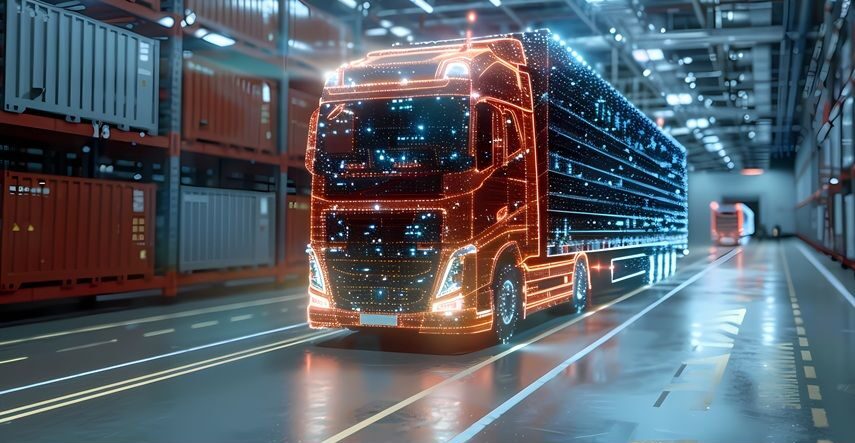


Faced with new legal obligations, rising costs, driver shortages, and increasingly complex supply chains,business owners are asking themselves: how can road transport be managed effectively today?
What the beginning of 2026 brings to the TSL (Transport, Shipping, and Logistics) industry clearly shows that existing management models are nearing the limits of their capabilities. The answer to these challenges may lie in road transport digital twins. How do they work? Aleet, a technology company revolutionizing overland transport management worldwide, provides the answers.
The start of the year in the EU brings further regulatory and operational changes to the road transport sector,intensifying pressure on efficiency. Starting in mid-2026, vehicles with a GVW (Gross Vehicle Weight) of 2.5 to 3.5 tonnes engaged in international transport will be required to use smart tachographs. This is a significant shift, particularly for express deliveries and last-mile logistics. At the same time, the latest EU statistics show that road transport still accounts for around 75% of all inland freight transport in the EU. This means the key challenge for companies will be answering the question: how to manage it more efficiently amid cost pressure,driver shortages, and growing operational complexity? Additionally, under a pilot program, longer truck combinations of up to 25.25 meters are being permitted on Polish roads. While this can boost haulage efficiency, it also creates new challenges—altering route planning, fleet utilization, and operating costs. In the face of these changes, it is worth asking: where can margins be found today, and what long-term growth decisions should be made?
Where to find margin and how to manage transport today?
The answer seems simple—margin can be “found” in highly advanced technologies. A road transport digital twin is the latest solution, already available and deployed in Poland as the first of its kind in Europe. It is a dynamic operational and economic model that mirrors the real-world functioning of a fleet, transport processes,and costs, and then allows decisions to be tested through simulation before they are implemented.
“The biggest shift in managing transport with a digital twin is that we discuss transport with a complete picture of the interdependencies between costs, fleet utilization, and planning decisions, thanks to generating the optimal scenario out of thousands calculated. Crucially, this solution integrates with any existing systems,including TMS, and its deployment time is measured in weeks. As a result, digital transformation becomes a reality not only for the largest operators, but also for mid-sized—and in the future, smaller—transport companies, especially in the express delivery segment,” says Dr. Katarzyna Marczuk, CEO of Aleet, the technology company behind the road transport digital twin.
How a road transport digital twin works and what it costs – case study
Implementing a digital twin does not require massive capital expenditure or an overhaul of IT infrastructure.Virtually any mid-sized or large transport company—regardless of fleet size—can deploy it. A digital twin is an investment that pays for itself quickly. That is why both road hauliers and courier companies are turning to it.The return on investment and margin gains stem from, among other things, reducing empty miles, better matching orders to available fleet and drivers, and cost transparency at the route and customer level. In courier and last-mile services, the greatest value comes from territory staffing strategies, time windows,delivery priorities, and understanding the impact of volume fluctuations on fleet utilization and service quality.In practice, an investment in a digital twin typically pays back within 3 to 6 months—and in the case of large-scale operations or high empty-mileage costs, in as little as 1 to 2 months.
“The process of creating a digital twin begins with gathering data—such as order execution details, driver working hours, cost structures, and so on. Based on this, a model is built and then tailored to the specifics of a given organization: route types, customer profiles, operational and regulatory constraints, etc. The next step is defining business objectives, such as reducing empty miles, improving fleet utilization, or stabilizing costs. AI algorithms then analyze thousands of operational scenarios under real-world conditions and identify those that best achieve the set goals—at zero cost and zero risk,” explains Jan Białas, Head of Product at Aleet.
One example is a road transport carrier/operator simultaneously servicing three major contracts: a retail chain (numerous drop-off points, high deadline pressure), a manufacturer (fewer points, but long loading times), and an e-commerce client (high order volatility).
Previously, planning relied on the dispatcher’s “experience,” and costs were settled in aggregate. The digital twin simulated three variants: (1) maintaining the current fleet allocation, (2) dedicating part of the fleet to the most volatile client, and (3) shifting part of the volume to different time windows and changing the loading sequence. The system revealed that one of the contracts was “eating up” margins due to expensive overtime and empty return runs.
After implementing the recommended scenario, the company reduced empty kilometers, improved driver utilization within legal working hours, and restored profitability at the level of individual routes and clients.
Another example is the dilemma of whether to buy or lease additional vehicles before peak season. For the November–December period, a company considered leasing extra vehicles, but feared it wouldn’t be able to cover the costs if freight volumes fell short. The digital twin enabled safe testing of scenarios with volume fluctuations of +10% to +20%, varying fuel rates, driver availability, working-time constraints, as well as subcontractor options. The simulation results indicated the exact point at which it was more profitable to expand the fleet versus when it was better to restructure routes (e.g., through consolidation) and cut empty miles. As a result, the decision was not based on intuition, but on transparent costs and risks, with no disruption to ongoing contracts.
The benefits are tangible. A digital twin enables the safe testing of hundreds of operational decisions without financial risk or errors to select the most efficient solution. This translates into a real opportunity to cut costs by up to 30% and boost profits by several dozen percent. Faced with new regulations, the continued dominance of road transport, and growing operational complexity, digital twins—just as in warehousing—are becoming a tool in road transport that allows carriers to shift from reacting to problems to designing transport operations in a predictable, data-driven, and market-resilient way.


PDF file for download: Informacja_prasowa_ALEET_casestudy_jaka dziala_cyfrowy_bliźniak_29012026 (002)

The TMS era is over! Time to unlock greater efficiency and profitability in road transport.

(Warsaw, 13.01.2026)
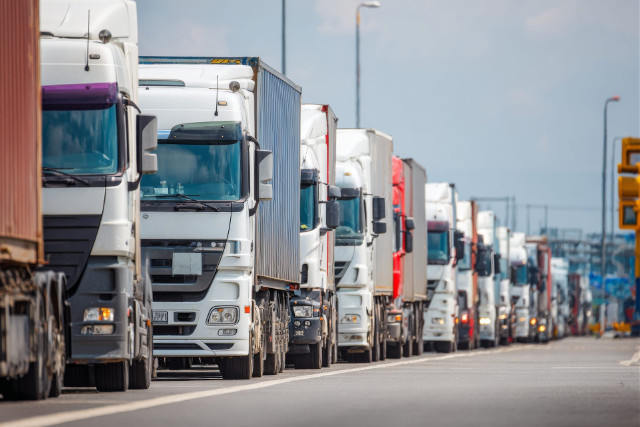
 

Ciężarówki stojące w korku na autostradzie


The beginning of 2026 brings a revolution to road transport. Carriers can boost cost efficiency and profitability by up to 30% if they change their approach to fleet and operations management. ALEET, a global technology company with Polish roots, is revolutionizing road freight transport through the use of digital twins and unique AI-powered haulage analytics. This translates into far more efficient fleet utilization, an end to empty miles,higher profits, and greater resilience against current challenges—both climatic and geopolitical.
It is the end of the traditional TMS (Transport Management System) era. ALEET goes completely beyond previously known models of managing road transport and vehicle fleets.
“In recent years, road transport has become one of the most cost-complex operational areas. Regulatory requirements and compliance demands are growing, alongside labor cost pressure, fuel price volatility, driver shortages, increasingly demanding contracts, and sustainability expectations. As a result, every operational decision has a significant impact on the bottom line and margins of transport companies.
Until now, there have been no effective tools for managing haulage and fleets that account for all operational factors and cost elements. Widely used platforms, such as traditional TMS systems, are unable to incorporate all data, learn from it, and perform automated analysis under conditions of constant change,” says Dr.Katarzyna Marczuk, CEO of ALEET.
ALEET’s solutions deployed in transport companies create bespoke digital twins of transport operations for each business. They enable simulating hundreds of transport operations and fleet utilization scenarios with full cost visibility under current operating conditions—all with rapid integration into existing IT systems, including TMS platforms, and without massive capital expenditure.
A digital twin instead of a traditional Transport Management System (TMS)
ALEET’s digital twin is a dynamic operational and economic model powered by intelligent data analytics that mirrors real-world transport processes along with their costs, constraints, and interdependencies. Operating within a single cohesive analytical environment, it allows thousands of scenarios to be simulated before an operational decision is made. A dispatcher or planner can automatically analyze how specific choices—regarding routes, fleet and individual vehicle deployment, schedules, contract execution, or resource allocation—will affect costs and financial results under varying market and road conditions. Crucially, thanks to AI algorithms, data processing happens almost instantaneously (within tens of seconds), making the work of a planner, dispatcher, or freight forwarder more efficient than ever before. It enables them to select options free of operational and financial risk that deliver the highest cost and time efficiency for the fleet, and thus higher profitability.
“Deploying ALEET’s systems translates into measurable business outcomes. Implementation enables increasing transport cost efficiency by up to 30% and boosting the profitability of transport operations by several dozen percent. These results stem from better resource utilization, the elimination of suboptimal scenarios, and full cost transparency at the level of routes, vehicles, contracts, and operating models.
Importantly, achieving these results does not require replacing existing systems,” emphasizes Dr. Katarzyna Marczuk, CEO of ALEET.
ALEET’s solutions are designed to be universal and technology-agnostic. They can be used by both large fleet organizations and mid-sized transport companies, and they are not highly capital-intensive.
“We combine technology with expert team support. Users of ALEET’s systems gain access to ongoing updates and innovations within a single deployment, with no additional licensing fees. We are also developing strategic partnerships with global telematics technology providers, ensuring high data quality and solution scalability,” concludes the CEO of ALEET.
ALEET targets transport and fleet companies that want to build a competitive advantage based on data analysis and informed operational decisions, treating transport as a strategic area and a measurable source of revenue growth.
ALEET was founded by Polish tech visionary Dr. Katarzyna Marczuk, who brings years of experience in building highly advanced solutions for the transport industry. She has led international deployments of advanced transport systems—including the world’s first autonomous shared mobility deployments in Singapore and the US—collaborating with the largest global players in the sector. Today, she applies her experience to building next-generation transport solutions that address the real-world operational challenges and problems of transport companies.

PDF file for download: Informacja_prasowa_ALEET_Koniec_ery_TMS_13012026