
 EU Projects

Key Highlights
The Most Difficult Decisions in a Startup Are Not About Technology — They Are About People!
05.08.2026
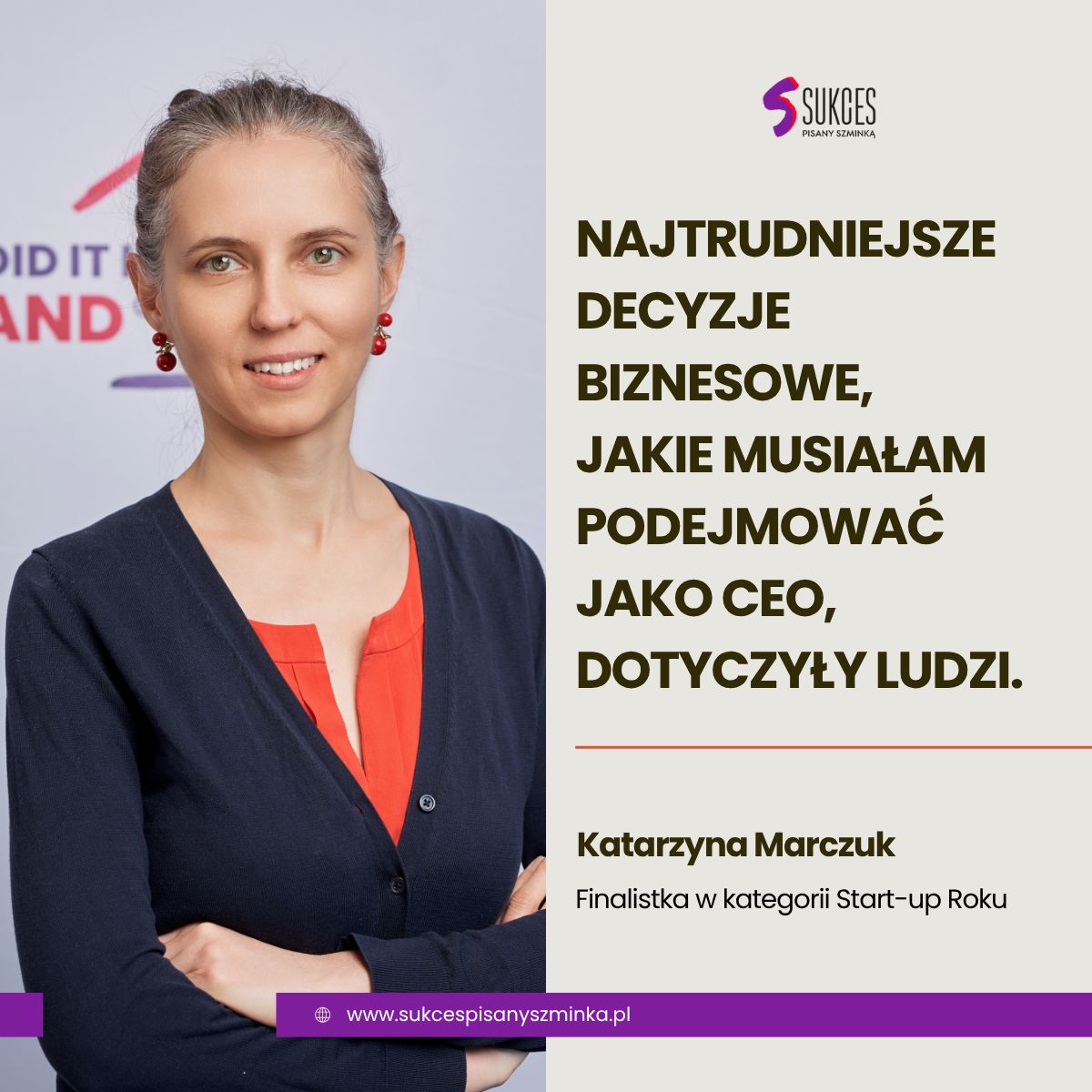
This is a statement by Dr Katarzyna Marczuk, CEO of ALEET — finalist of the 17th edition of the Sukces Pisany Szminką Awards in the Startup of the Year category.
In her conversation with the editorial team, she talks about what building a technology startup really looks like. She speaks about artificial intelligence, algorithms, and innovation, but also about responsibility for people, making decisions under uncertainty, and continuously confronting the product with the real needs of the market.
You can read the interview — focused on leadership, responsibility, and building a startup for the transport and logistics sector — at the link below: https://sukcespisanyszminka.pl/katarzyna-marczuk-startup-aleet/
How the Fleet Digital Twin Is Transforming Operational Competencies in Transport and Logistics
29.07.2026

Competitive advantage will be gained not by the companies that buy AI tools first, but by those that learn to use them in everyday operational decisions. Is the implementation of a fleet digital twin merely an investment in new technology, or is it also a moment of building organisational experience that, in a few years, will be just as valuable as the solution itself?
Technology evolves much faster than organisations learn to use its potential. This applies to nearly all solutions based on artificial intelligence algorithms. It is far easier to decide to purchase an AI tool than to make those responsible for its implementation aware of the competencies required and the skills that can be developed through the process.
Technology as strategy, not a project
We have become accustomed to viewing technological implementations primarily as projects. We talk about timelines, system integrations, and return on investment. We also touch on the change that affects decision‑making, operational process management, and the use of data within organisations. This means working in an environment that relies on increasingly large data streams, understanding the relationships between business and operational processes, and assessing the value of system‑generated recommendations. Solutions based on artificial intelligence are therefore not just technological projects — they become elements of business strategy. Yet we rarely consider which competencies emerge during their implementation and how they reshape organisational functioning and workplace culture. From a business perspective, this may be one of the most important values of today’s technological transformation.
In this context, it is worth noting that technologies being implemented today — such as the fleet digital twin — will become widely available in a few years. Competitive advantage will not necessarily belong to the companies that buy AI tools first, but to those that learn to use them effectively in everyday operational decisions.
This is clearly visible in the case of fleet digital twins used in road transport management and powered by AI. Their potential goes far beyond fast integration and data processing. They change how organisations are managed. They allow companies to analyse the consequences of decisions before they are made, model operational scenarios, and support processes in real time. However, technology remains only a tool — ultimate responsibility for its use and the decisions made still lies with humans. Unfortunately, this is precisely why new implementations are often perceived as an additional operational burden. In reality, they become a process of building and developing new competencies among those responsible for using this new potential.
These competencies should not be reduced to knowledge of a specific technological solution. They involve understanding business processes operating in an AI‑supported environment — for example, comparing operational scenarios, assessing the quality of system recommendations, and understanding trade‑offs between costs, fleet utilisation, and SLA (Service Level Agreement).
A broader perspective on technological implementation It is worth looking at the implementation of new technologies from a wider perspective. Those who first acquire competencies for managing AI‑supported operational processes will gain the advantage. In a few years, access to solutions entering the market today will no longer be a differentiator — but the competencies gained during their implementation will allow employees to navigate an increasingly AI‑supported environment more effectively, regardless of their role or age.
ALEET as a Partner of the 14th Women in Logistics Forum
10.06.2026
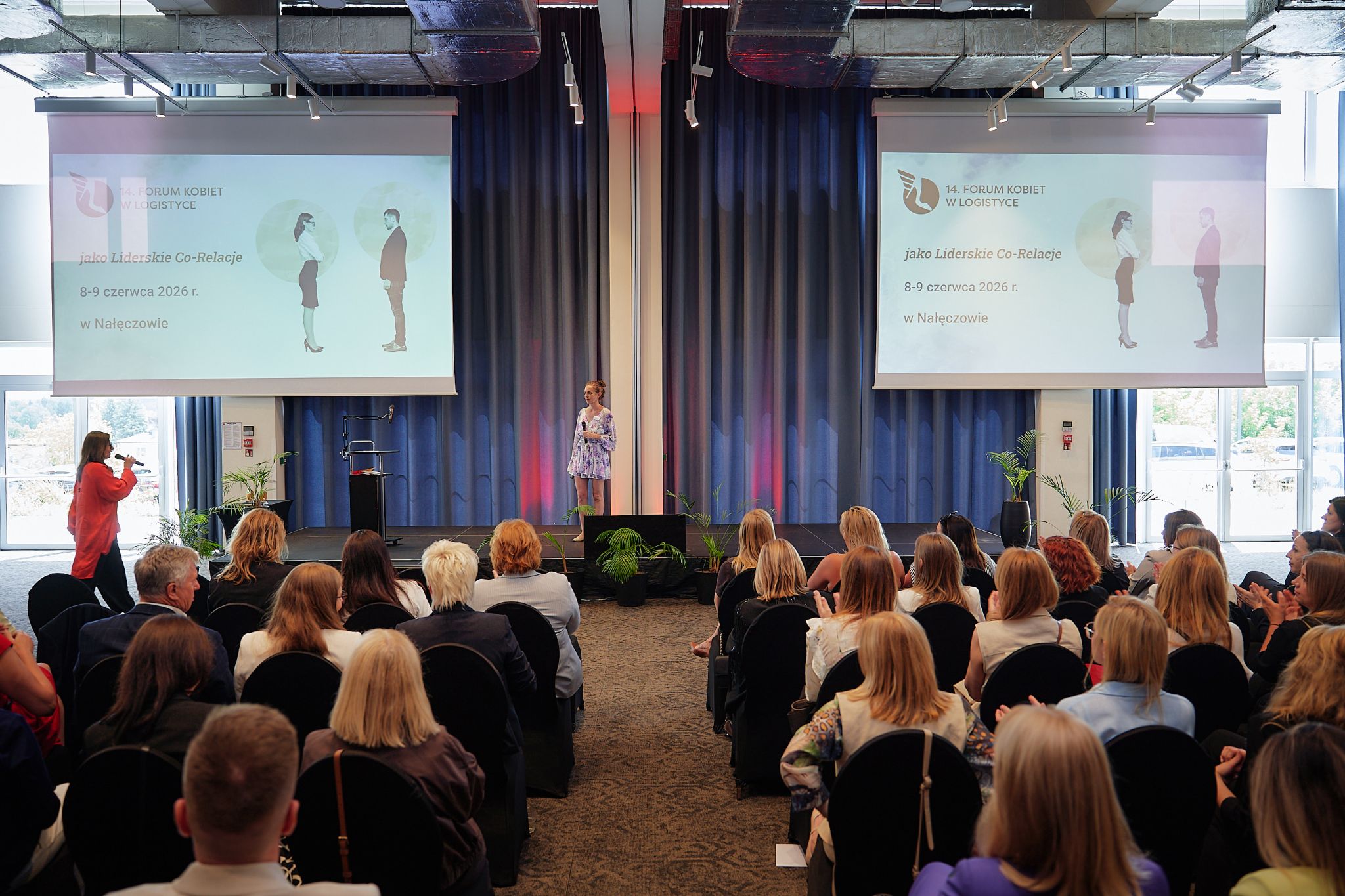
ALEET joined the group of partners of the 14th Women in Logistics Forum as a Leadership Co‑Relation Partner. The event, held on 8–9 June 2026 in Nałęczów, brought together more than 100 leaders from across the TSL sector. ALEET was represented on stage by Dr Katarzyna Marczuk, CEO of the company, an expert in artificial intelligence and modern technologies for transport, who presented the concept of the fleet digital twin.
The Women in Logistics Forum served as a space for discussions about the future of the industry, the exchange of experiences, and relationship‑building. This year, a central theme of the conversations was the technological transformation of transport and logistics, as well as the growing role of artificial intelligence in business and operational decision‑making.
Dr Katarzyna Marczuk delivered a presentation titled “Between Us and AI Algorithms”, dedicated to the changes introduced by DTS – Digital Twin System technology in transport management.
The CEO of ALEET presented the concept of the ALEET fleet digital twin and, more broadly, the possibilities of using Digital Twin System (DTS) technology to connect data, operational processes, and AI algorithms. She demonstrated, through practical examples, how such solutions can support transport and logistics companies in making strategic decisions related to fleet utilisation, operational planning, and cost optimisation. This marks a shift beyond traditional approaches to transport management systems. The development of AI and digital twins enables companies to move from tools focused on reporting to those that support scenario analysis and decision‑making.
The presentation sparked lively discussion among Forum participants. Numerous questions and diverse perspectives confirmed that the practical use of AI in business is currently one of the topics most engaging the TSL sector.
On the second day of the event, Dr Katarzyna Marczuk also took part as a panelist in a workshop led by Karolina Kulikowska‑Gruszecka from the Domański Zakrzewski Palinka (DZP) law firm. The discussion focused on operational data security — an issue gaining particular importance as data and artificial intelligence are increasingly used in transport. Effective transformation requires knowledge, experience, readiness for change, and dialogue between those responsible for business and operations.
ALEET’s participation in the 14th Women in Logistics Forum was not only an opportunity to present the direction in which we are developing technology for the TSL sector, but above all a chance to meet and speak with women leaders who make decisions shaping the future of transport and logistics every day. We thank the organisers of the Women in Logistics Forum for the invitation and the opportunity to participate, and all attendees for inspiring conversations, questions, and the exchange of experiences.
Road Transport Enters the Era of DTS – Digital Twin Systems!
18.05.2026
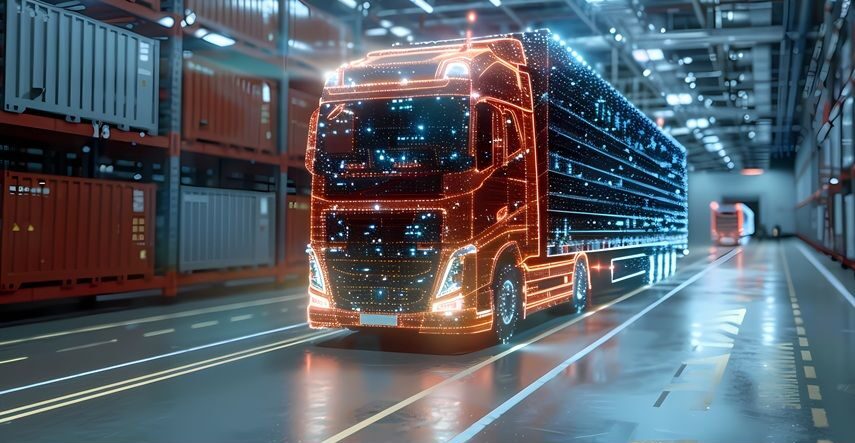
The transport and logistics sector is entering a new phase of development in which decision‑making and prediction replace traditional transport management based on telematics data. According to ALEET experts, we are entering the era of DTS – Digital Twin Systems, meaning digital twins of fleets and transport operations.
The digital twin is no longer a technological curiosity or an add‑on to existing ERP systems. It is becoming a decision‑making layer that not only analyses data but, above all, predicts the consequences of operational decisions before they are implemented in reality. For years, the market optimised information flow. TMS systems organised orders, planning, and documentation. But modern transport and logistics require more than process registration. They require the ability to predict, simulate, and autonomously respond. This is why we speak today about the end of the TMS era and the beginning of the DTS era.
The key point is that the Digital Twin System changes how decisions are made in transport organisations. A classic TMS organises information about what has been planned and executed. DTS goes a step further — it helps answer the question: what might happen next, and which operational variant will be best for the entire operation? TMS answers the question “what happened.” DTS answers the question “what will happen next, and how should we respond?”
The ALEET fleet digital twin creates a virtual representation of the entire transport operation — vehicles, drivers, routes, infrastructure constraints, and telematics data. The system not only analyses historical data but continuously generates future operational scenarios. In practice, it allows companies to identify a problem before it becomes a real operational cost. The system can predict the impact of delays, vehicle breakdowns, driver availability changes, or traffic congestion on the entire transport network — including timeliness, costs, and fleet utilisation. This is the fundamental difference compared to a classic TMS. A digital twin not only shows the state of operations but allows companies to compare possible scenarios and choose the best operational decision.
DTS solutions bring particular value in environments with high variability and significant operational complexity. ALEET experts believe that the biggest transformation is still ahead. For years, transport companies operated in a reactive model. Planning relied on dispatcher experience, historical data, and static schedules. Meanwhile, modern fleet operations function in conditions of constant variability — dynamic route changes, driver shortages, infrastructure disruptions, new climate regulations, time constraints, and rising customer expectations require a completely new technological approach.
According to ALEET experts, traditional transport system architecture no longer meets market needs. DTS can simulate the impact of traffic congestion, vehicle breakdowns, loading delays, and assess how these affect the entire transport network, recommending the best course of action. The more data flows into the system, the more accurate the forecasts and recommendations become. ALEET experts emphasise that this represents the most significant technological shift in transport since the widespread adoption of ERP and TMS systems.
Soon, we will no longer ask “do you have a TMS?” but “how advanced is your DTS?” Companies that rely solely on classic transport management systems will begin to lose in reaction speed, cost efficiency, and quality of operational decisions. DTS will become one of the new standards of competitiveness.
Podcast “Technology Out Loud” – series “Beyond Logistics” – The Digital Twin in Fleet Management and Freight Forwarding
07.05.2026
We invite you to listen to a podcast featuring Dr Katarzyna Marczuk, CEO of ALEET, recorded by the editorial team of Logistyka.net.pl.
In the conversation with Dr Katarzyna Marczuk, the Logistyka.net.pl editors ask the ALEET CEO how the fleet digital twin supports and enhances the technological management of freight forwarding and fleet operations. How do algorithms support route management, and what is the role of humans in this process? How does the system behave when faced with different requirements across companies and countries? Does it help reduce forwarding and transport‑related costs?
The podcast is available at the following link:
Breakfast with the Fleet Digital Twin – ALEET’s First Open Meeting with the TSL Sector
29.04.2026
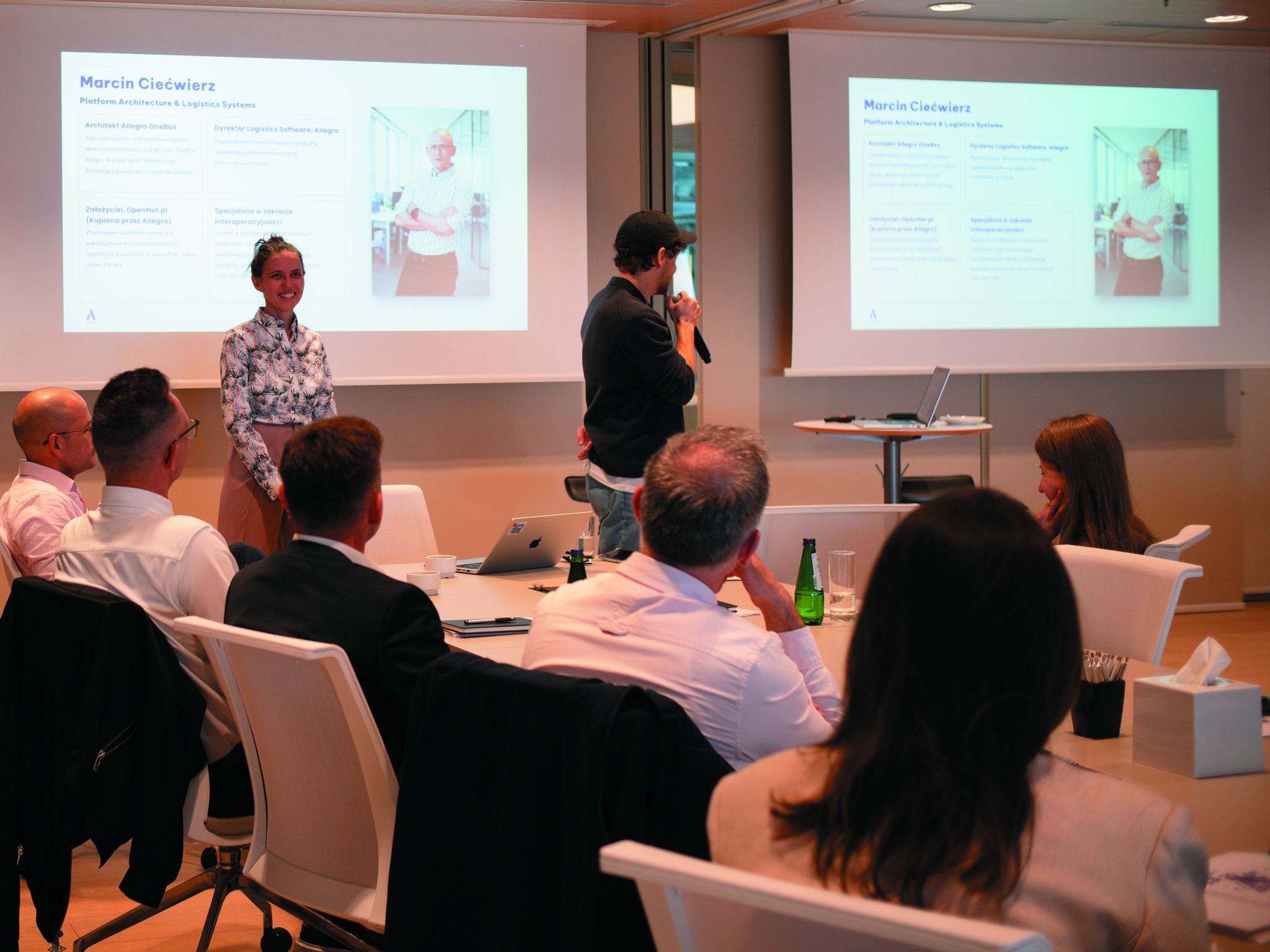
On 28 April 2026, a dedicated meeting titled “Breakfast with the Twin: AI Revolution in Transport” took place in Warsaw, organised by ALEET in cooperation with the Domański Zakrzewski Palinka (DZP) law firm. We invited representatives of transport and logistics companies as well as journalists interested in the technological transformation of the TSL sector.
Where do transport companies really lose margin? How can inefficiencies be identified when they are not visible in standard KPIs? And how can AI and the fleet digital twin be used to make better operational decisions? These were the key topics discussed with the entrepreneurs and leaders from the transport and logistics industry who joined us for the breakfast meeting.
Where does margin really “escape” in transport?
The starting point for the discussion was one of the most important challenges in modern road transport: losses generated at the level of everyday operational decisions. During the meeting, we talked about why standard KPIs and reporting systems do not always reveal the true sources of losses, how planning decisions translate into financial results, and where inefficiencies hide in daily transport operations—often impossible to detect using traditional analytical tools.
We also presented answers to these questions through a concrete case study using the ALEET fleet digital twin.
Fleet digital twin – from data to decisions
The fleet digital twin is a solution developed by ALEET that uses artificial intelligence and advanced analytics to replicate transport operations in a digital environment. The technology makes it possible to identify hidden costs and inefficiencies, and thanks to predictive scenarios, to test potential decisions before they are implemented in real operations. This allows companies to analyse the impact of specific changes on fleet utilisation, empty mileage, costs, and overall profitability. The goal is to move from reporting what has already happened to consciously modelling what may happen after a particular decision is made.
AI also means responsibility for data
An important part of the meeting was the topic of cybersecurity and the protection of operational data used by AI‑based solutions. Karolina Kulikowska‑Gruszecka, attorney‑at‑law and Senior Associate in DZP’s IP&TMT practice, discussed the legal aspects of data use and the current obligations of companies.
From ALEET, the meeting was led by Dr Katarzyna Marczuk, CEO and Founder of ALEET, Jan Bialas, Principal Product Owner, and Marcin Ciećwierz, supporting ALEET’s business and product development.
Technology works best in dialogue with business
The first “Breakfast with the Fleet Digital Twin” was above all an opportunity for direct conversation with people who deal with operational challenges in transport every day. Specific questions, the exchange of experiences, and discussions around real problems in the sector confirmed how important it is today to seek new methods of managing transport efficiency.
We thank all participants for their presence and valuable discussions, and the DZP law firm for their partnership.
There will certainly be more events of this kind, and we already invite you to join us and talk with the ALEET team!
AI Technology Is Transforming Competencies in Road Transport
16.03.2026
The most significant technological changes do not begin with new systems — they begin with a shift in competencies. For years, one of the key skills in road transport was analytical thinking, essential for creating and interpreting reports: organising data and orders, reporting them, and controlling transport execution. Today, the logic of fleet management is undergoing a complete transformation — it is based on predictive technologies and AI, and with their development comes the need for new skills. What does this mean for the transport and logistics sector, and in which direction will competency change evolve?
For many years, road transport developed around competencies related to organising operations and reporting historical data (often still in Excel). Companies needed specialists capable of managing vast amounts of information about orders, routes, fuel costs, driver working hours, and fleet utilisation. Naturally, this led to the emergence of the role of a specialist or manager responsible for Transport Management Systems (TMS) — a person tasked with managing transport order data, controlling them, and preparing reports.
This model worked well in a dynamic yet relatively predictable environment, where operational and economic changes occurred at a slower pace. Today, however, the conditions in which transport operates are far more demanding. Economic volatility, limited driver availability, geopolitical tensions, increasing regulatory pressure, fuel price fluctuations, and rising labour costs mean that transport management is now primarily about responding in real time to changing parameters in the environment in which transport operations are carried out.
The problem with reporting As ALEET experts emphasise, the key change in road transport management concerns how operational decisions are made and how critical thinking is applied. Traditional and widely used TMS systems describe what has already happened in transport operations. Based on historical data, they allow companies to analyse completed orders, costs, and fleet utilisation. However, they do not help answer the question of what will happen if we change certain operational parameters today — and today we must decide what to do next, not to mention achieving cost transparency.
Transport now operates in an environment where even small changes in parameters — such as order structure, contract conditions, weather, fuel prices, or driver availability — significantly affect margins and operational costs. Therefore, reporting historical data is no longer sufficient for making decisions about transport planning and fleet utilisation, including understanding all current costs.
Predictive scenarios New technologies allow fleet and order management to be analysed in a completely different way than through traditional TMS. For example, a solution based on the concept of a fleet digital twin creates a virtual operational‑economic model of transport and performed deliveries by processing data in real time. This enables the creation and testing of hundreds of transport scenarios before an operational‑cost decision is made. Such an approach allows companies to examine the impact of changes on order structure, test different fleet utilisation models, and assess the economic consequences of changes in operational costs.
A change in technology means a change in competencies Crucially, the shift in how transport operations are managed also requires a shift in the competencies needed to manage transport. If a fleet digital twin can generate hundreds of operational scenarios within minutes, the greatest value in transport management is no longer the preparation of a report. The greatest value becomes the ability to interpret those scenarios and understand their business implications. In practice, this means developing competencies in reading operational scenarios and making decisions in an environment of high variability.
With this progress, the importance of roles focused solely on managing systems that report historical operations — such as traditional TMS — is diminishing. ALEET experts indicate that in the coming years, the most important skills in road transport will be the ability to analyse predictive models, understand the economics of transport operations, and make decisions under conditions of significant fluctuations across many market factors.
The Fleet Digital Twin Is Reshaping the Balance of Power in the Transport and Logistics Market
24.02.2026
For over a year, Aleet has been implementing the fleet digital twin for road freight transport in Poland – a dynamic operational‑economic model that replicates the real functioning of fleets and transport operations. It is an analytical model that processes current and historical data, learns from real operations, and evaluates thousands of operational scenarios before recommending the optimal one.
For years, the road transport sector operated under a simple assumption: whoever scales volumes, has capital, and owns an internal IT department sets the rules. In other words, global players dictate rates, deadlines, and margins, while everyone else adjusts. Today, this assumption has been challenged. Not by EU regulators or investment funds, but by technology – solutions created and available in Poland.
If we accept that in an industry with single‑digit margins (typically between 3% and 5%), every improvement in efficiency has strategic significance, then the reductions in operational costs of up to 30% and profitability increases of several dozen percent – declared and, as Aleet emphasises, confirmed in practice – have a structural impact and determine the viability of the entire business. This is not cosmetic change. It is a transformation of the economic equation.
The myth of technological advantage
Large logistics organisations have long built a narrative around their extensive IT departments as a source of competitive advantage. Hundreds of specialists, multi‑year projects, proprietary planning modules – all intended to create a competitive edge and a barrier to entry for smaller operators. In practice, many of these structures focus on maintaining existing infrastructure, integrations, and day‑to‑day operational support. Innovation is often subordinated to stability, and breakthrough projects frequently stall in internal procedures and compromises.
The Aleet fleet digital twin does not replace transactional systems; instead, it builds an analytical layer above them that reflects real fleet constraints such as driver working hours, downtime, road tolls, contract structures, and characteristic bottlenecks. The model is calibrated to match operational reality – not simplified assumptions. Based on this, AI algorithms analyse thousands of scenarios: different variants of vehicle allocation, changes in the sequence of order execution, modifications to contract structures, or entering new relationships and cargo flows. Each variant is evaluated in terms of unit costs, resource utilisation, and impact on financial results.
One model instead of a team of dispatchers and planners
According to Aleet, a single implemented fleet digital twin model can perform work equivalent to that of an entire team of planners or dispatchers. The cost of implementation corresponds to an ROI (Return on Investment) of no more than 3 to 6 months, often even shorter. Implementation time is measured in weeks, and the solution integrates with any existing systems without requiring IT infrastructure reconstruction.
In practice, this means the ability to safely test high‑risk decisions – from reorganising route networks to changing rate structures – before a company makes financial commitments. Instead of relying solely on the experience and intuition of a planner or dispatcher, the company receives simulations of thousands of variants along with their cost and margin implications.
Poland as a pioneer of change
The first European implementation of a fleet digital twin was carried out in Poland, one of the largest and most competitive road transport markets in the European Union. Today, the solution is already operating in several transport and logistics companies, covering real fleets, real contracts, and real profit‑and‑loss accounts. This is not a pilot or a technology demonstrator, but an operational tool used in daily management. The results are not assumptions – they are precisely calculated. Implemented models have delivered operational cost reductions of up to 30% and significant profitability increases at the level of individual routes, contracts, and entire business segments. In practice, this means a shift in decision‑making – from reactive management to planning based on simulations of thousands of operational scenarios and their impact on margin.
In this context, the question for the industry is no longer whether the technology can work, but how quickly it will become the new standard in transport management.
In a sector where every percentage point of margin determines survival, it is precisely such solutions that change the rules of the game.
How a Digital Twin of Road Transport Brings Order to Costs and Efficiency?
29.01.2026

In light of new legal obligations, rising costs, driver shortages and increasingly complex supply chains, business owners are asking themselves: how can road transport be managed efficiently today?
The start of the year brings further regulatory and operational changes to the EU road transport industry, adding to the pressure for efficiency. From mid-2026, vehicles with a GVW of 2.5 to 3.5 tonnes that carry out international transport will be required to use smart tachographs. This is a significant change, especially for express and last-mile transport. At the same time, the latest EU statistics show that road transport still accounts for around 75% of all inland freight transport in the EU.
This means the key challenge for companies is how to manage it more efficiently, under cost pressure, a shortage of drivers and growing operational complexity. In addition, as part of a pilot programme, longer heavy goods vehicle combinations of up to 25.25 m are being allowed on Polish roads. While this can improve transport efficiency, it also creates new challenges: it changes route planning, fleet utilization and operating costs. Given these changes, it is worth asking where to look for margin today, and which strategic decisions to make over the longer term.
Where can you find margin, and how should transport be managed today?
The answer seems simple: margin can be “found” in highly advanced technology. The digital twin of road transport is the newest solution, already available and being implemented in Poland, the first such deployment in Europe. It is a dynamic operational and economic model that reflects the real-life operation of a fleet, its transport processes and costs, and then lets you test decisions through simulation before they are put into practice.
The biggest change in managing transport with a digital twin is that you discuss transport with a full picture of the relationships between costs, fleet utilization and planning decisions, because the best scenario is selected from thousands of calculated ones. Importantly, the solution integrates with existing systems and with any other systems, including TMS, and its implementation time is measured in weeks.
As a result, digital transformation becomes realistic not only for the largest operators, but also for mid-sized companies and, in the future, smaller transport companies too, especially in the express delivery segment.
How does a fleet digital twin work, and how much does it cost?
Implementing a fleet digital twin does not require huge financial outlays or a revolution in IT infrastructure. Practically any medium-sized or large transport company, regardless of fleet size, can implement it. A digital twin is an investment that pays for itself quickly, which is why both road hauliers and courier companies are turning to it. The return on investment and the margin come, among other things, from reducing empty runs, better matching orders to the available fleet and drivers, and cost transparency at the level of individual routes and customers. In courier and last-mile services, the greatest value comes from the strategy for area coverage, time windows, delivery priorities, and the impact of volume changes on fleet utilization and service quality. In practice, an investment in a digital twin most often pays for itself within 3 to 6 months, and with large-scale operations or high costs of empty runs, even within 1 to 2 months.
One example is a carrier / road transport operator serving three major contracts at the same time: a retail chain (many delivery points, high deadline pressure), a manufacturer (fewer points, but long loading times) and an e-commerce company (large fluctuations in orders).
Until then, planning had been based on the dispatcher’s “experience,” and costs were settled in aggregate. The digital twin simulated three scenarios: (1) keeping the current fleet allocation, (2) dedicating part of the vehicles to the most unpredictable customer, and (3) shifting part of the volumes to other time windows and changing the loading sequence. The system showed that one of the contracts was “eating up” the margin through expensive overtime and empty runs on the return trip.
After implementing the recommended scenario, the company reduced empty kilometres, improved driver utilization within working time limits, and restored profitability at the level of individual routes and customers.
Another example is the dilemma of whether to buy or rent additional vehicles ahead of the season. For November and December, the company was considering renting extra vehicles, but feared it would not be able to carry the costs if there were not enough loads. The digital twin made it possible to safely test scenarios with volume fluctuations of +10% to +20%, with different fuel prices, driver availability and working time restrictions, as well as scenarios involving subcontractors. The simulation result showed at what point it pays off more to strengthen the fleet, and at what point it is better to change the route structure (e.g. consolidation) and cut empty runs. As a result, the decision was not made by intuition but based on transparent costs and risks, with no impact on current contracts.
The benefits are measurable. A digital twin makes it possible to safely test hundreds of operational decisions without financial risk or errors, in order to choose the most efficient solution. This means a real chance of cutting costs by up to 30% and increasing profits by several dozen percent.
The End of the TMS Era! Time for Greater Efficiency and Profitability in Road Transport
(13 January 2026)

Aleet goes far beyond the traditional models of managing road transport and vehicle fleets. Carriers can now increase cost efficiency and profitability by up to 30% if they change their approach to fleet and operational management.
Aleet is revolutionising road freight transport through the use of fleet digital twins and unique AI‑driven transport analytics. This means far more efficient fleet utilisation, the elimination of empty mileage, higher profits, and greater resilience to current climate and geopolitical challenges.
It marks the end of the traditional Transport Management System (TMS) era. A digital twin instead of a traditional Transport Management System (TMS). The Aleet fleet digital twin is a dynamic operational‑economic model based on intelligent data analysis that replicates real transport processes along with their costs, constraints, and interdependencies. Operating within one coherent analytical environment, it enables the simulation of thousands of scenarios before an operational decision is made. A dispatcher or planner can automatically analyse how specific choices – related to routes, fleet engagement and individual vehicles, schedules, contract handling, or resource allocation – will affect costs and financial outcomes under different market and road conditions. Importantly, thanks to AI algorithms, data processing takes place within seconds, making the work of planners, dispatchers, and freight coordinators more efficient than ever. It allows them to select solution variants without operational or financial risk, ensuring maximum cost and time efficiency of the fleet, and thus profitability.
Aleet’s solutions are designed to be universal and technologically agnostic. They can be used both by large fleet organisations and medium‑sized transport companies. They are also not capital‑intensive.
Aleet addresses its solutions to transport and fleet companies that want to build competitive advantage based on data analysis and informed operational decisions, treating transport as a strategic area and a measurable source of revenue growth.
💸 PLN 5 Million Investment from CofounderZone and FundingBox Deep Tech Fund, Angel Investors
We are thrilled to announce that we raised PLN 5 million from CofounderZone, FundingBox Deep Tech Fund, and Angel Investors. This investment has accelerated our mission to digitize the transportation industry.